Friday, July 16, 2010

Smocking From Wikipedia, the free encyclopedia


Smocking is an embroidery technique used to gather fabric so that it can stretch. Before elastic, smocking was commonly used in cuffs, bodices, and necklines in garments where buttons were undesirable. Smocking developed in England and has been practiced since the Middle Ages and is unusual among embroidery methods in that it was often worn by laborers. Other major embroidery styles are purely decorative and represented status symbols. Smocking was practical for garments to be both form fitting and flexible, hence its name derives from smock — a farmer's work shirt.[1] Smocking was used most extensively in the eighteenth and nineteenth centuries.[2]


Smocking requires lightweight fabric with a stable weave that gathers well. Cotton and silk are typical fiber choices, often in lawn or voile. Smocking is worked on acrewel embroidery needle in cotton or silk thread and normally requires three times the width of initial material as the finished item will have.[3] Historically, smocking was also worked in pique, crepe de Chine, and cashmere.[4] According to Good Housekeeping: The Illustrated Book of Needlecrafts, "Any type of fabric can be smocked if it is supple enough to be gathered."[2]
Materials

Fabric can be gathered into pleats in a variety of ways.
Early smocking, or gauging, was done by hand. Some embroiderers also made their own guides using cardboard and an embroidery marking pencil.[2] By 1880, iron-on transfer dots were available and advertised in magazines such as Weldon's. The iron on transfers places evenly spaced dots onto the wrong side of the fabric, which were then pleated using a regular running stitch.
Since the early 1950s, pleating machines have been available to home smockers. Using gears and specialty pleater needles, the fabric is forced through the gears and onto the threaded needles. Pleating machines are typically offered in 16-row, 24-row and 32-row widths. Manufacturers include Read and Amanda Jane.


Variations

Typically, variations are done as an art form on clothing or on fabric which is mounted in picture frames for hanging on the wall.
  • English smocking is a historic technique of sewing the embroidery over pleats already sewn into the fabric.
  • North American smocking is an alternate technique in which the pleats are gathered and formed in the fabric by the smocking stitch-work itself.
  • Lattice smocking involves stitching from the back side of the fabric, creating unique effects in the pleats and appearance, and is particularly good for heavier fabrics like velvet.

Saturday, July 10, 2010

Las palabras del paisaje.

Joaquín Araújo
Los paisajes suenan, cantan, interpretan y por supuesto dicen. Les oiremos murmurar con las mil entonaciones del viento y de las aguas y la infinita gama de tonalidades que se desprende de las caricias que esos dos elementos le dan a todo lo que vemos. Pero dentro del panorama suenan, sobre todo, sus solistas. También casi todos los inquilinos del mundo no edificado expresan a través del sonido. Todos necesitamos que se sepa de nuestro pertenecer a un lugar, o a muchos. Pero allí oiremos también el capricho, el esplendor de la primera creatividad, la alegría que desata aprestarse a la renovación.
La Naturaleza usa infinitos lenguajes que apenas somos capaces de comprender pero que si podemos disfrutarlos con la seguridad de que todos ellos fundan la vivacidad e intentan la belleza.

El sonido de la naturaleza | elmundo.es

El sonido de la naturaleza | elmundo.es

Friday, July 2, 2010

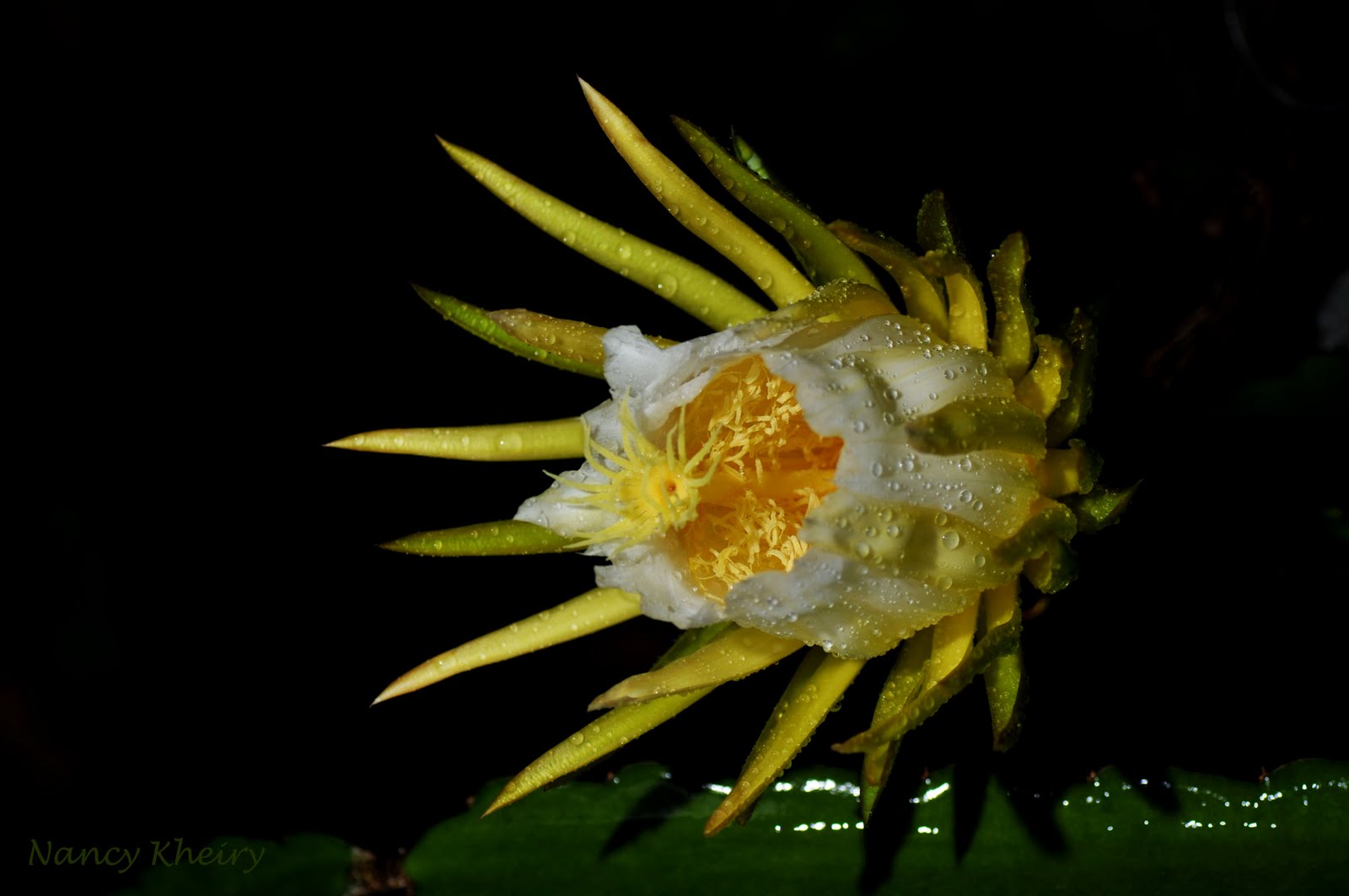
Flor de Pitahaya abriendo bajo la lluvia


Mi debilidad, la hermosa flor de la Pitahaya


A pitaya (pronounced /pɨˈtaɪ.ə/) or pitahaya (English pronunciation: /ˌpɪtəˈhaɪ.ə/) is the fruit of several cactus species, most importantly of the genus Hylocereus (sweet pitayas). These fruit are commonly known as dragon fruit – cf. Chinese huǒ lóng guǒ 火龍果/火龙果 "fire dragon fruit" and lóng zhū guǒ "dragon pearl fruit", or Vietnamese thanh long (green dragon). Other vernacular names are strawberry pear or nanettikafruit.
Native to Mexico and Central and South America, the vine-like epiphytic Hylocereus cacti are also cultivated in Asian countries such as Taiwan, Vietnam, Thailand, the Philippines, Sri Lanka and Malaysia. They are also found in Okinawa, Hawaii, Israel, northern Australia and southern China. Hylocereus blooms only at night; the large white fragrant flowers of the typical cactusflower shape are among those called "moonflower" or "Queen of the Night". Sweet pitayas have a creamy pulp and a delicate aroma.
If not otherwise stated, this article's content refers specifically to the pitayas of Hylocereus species, or "dragon fruit".


Stenocereus queretaroensis pitaya prepared for eating


Varieties

Stenocereus fruit (sour pitayas) are of more local importance, being commonly eaten in the arid regions of the Americas. They are more sour and refreshing, with juicier flesh and a stronger taste, and are relished by hikers.  
The common Sour Pitaya or pitaya agria (S.)[1] in the Sonoran Desert has been an important food source for Native American peoples. The Seri people of northwestern Mexico still harvest the highly appreciated fruit[2], and call the plant ziix is ccapxl – "thing whose fruit is sour". The fruit of related species, such as S. queretaroensisand Dagger Cactus (S. griseus)[3], are also locally important food. Somewhat confusingly, the Organ Pipe Cactus (S. thurberi) fruit (called ool by the Seris) is the pitahaya dulce ("sweet pitahaya") of its native lands, as dragon fruit are not grown there in numbers. It still has a more tart aroma than Hylocereus fruit, described as somewhat reminiscent of watermelon; it has some uses in folk medicine.
Fruits of some other columnar cacti (mainly Cereeae) are also called "pitayas" – for example those of the Peruvian Apple Cactus (Cereus repandus).


Poland rediscovering its Jewish past - CNN.com

Poland rediscovering its Jewish past - CNN.com