Sunday, September 13, 2009

Cevahir Mall

Cevahir Mall

From Wikipedia, the free encyclopedia


Cevahir Shopping Centre

Interior panorama of the Cevahir Shopping Center
Location Istanbul, Turkey
Address Büyükdere Cad. No. 22 Şişli- Istanbul
Opening date 15 October 2005
Developer Cevahirler Group
Management Cevahirler Group
Owner Cevahirler Group

Cevahir Shopping Centre, opened on 15 October 2005, is a modern shopping and entertainment centre located in the Şişli district of Istanbul, Turkey. Called also Şişli Kültür ve Ticaret Merkezi (Şişli Cultural and Trade Centre). Cevahir Mall is the largest shopping centre in Europe, and the sixth largest in the world.[1]

Contents

[hide]

[edit] Origins

The project, originally a trade complex including retail centers and three skyscrapers with 40 and 48 floors to replace one of the city's old bus depots, was designed in 1987 by American architects Minoru Yamasaki & Associates. The foundation stone was laid in 1997; however, it took eight years to complete only the shopping centre section due to numerous delays and suspensions of construction. One of the other major architects who took part in the creation of this mall was Can Yavuzarslan, a Turkish/British dual citizen.

[edit] Structural specifications

Cevahir Shopping Centre has a total gross area of 420,000 square metres (4,521,000 sq ft) on six floors and cost US$250 million to build. There are 343 shops, some of which are the first in Turkey to sell certain international brands; 34 fast food restaurants and 14 exclusive restaurants in the shopping centre. Under its roof, there is a big stage for shows and other events, 12 cinemas including a private theatre. It has also a cinema for children, several other entertainment facilities, and a bowling hall. A small roller coaster is part of the entertainment area. The building's 2,500 m2 (26,910 sq ft)-glass roof carries the biggest clock in the world, with three-metre (10 ft)-high digits.

The car park has a capacity of 2,500 cars. 5,000 service people are employed on the property. The shopping centre is situated in the business quarter on the European side of Istanbul between Şişli and Mecidiyeköy and also can be reached easily by Istanbul metro. Three floors of the shopping centre are connected directly to the metro line. There are also strong "airport security" type measures.

[edit] Ownership and operations

The shopping centre, co-owned and operated by Cevahirler Group, was opened to the public with a grand ceremony by Prime Minister Recep Tayyip Erdoğan. A crowd of 450,000 people visited the complex on that day. Recently, 190,000 visitors come to the shopping centre daily. It is open seven days a week from 10:00 to 22:00 hours (UTC+2).

The centre was sold in 2007 and following the purchase by St. Martins a professional makeover of the management operation has taken place. Jones Lang LaSalle have been appointed managing agents.

[edit] Anchors and other stores

Some of the international brands in the shopping centre are as follows: Debenhams, Dorothy Perkins, Evans, Jack&Jones, Vero Moda, Peacocks, Topshop, Top Man, Miss Selfridge, River Island, Benetton, Mothercare, Esprit, Massimo Dutti, La Senza, Zara, BSB, Adidas, Dockers, Levi's, Kappa, Fornarina, Reebok, Converse,Lotto, Guess World, Nine West, Bata, Divarese, Starbucks, Gloria Jean's, Burger King, McDonalds, KFC, and Pizza Hut. There are also many locally based stores and Turkish restaurants, offering local dishes such as milk-based desserts and kebabs.

[edit] Gallery

Şişli, Istanbul

Şişli

From Wikipedia, the free encyclopedia

Jump to: navigation, search
Atatürk Museum in central Şişli

Şişli is a crowded central district of İstanbul, Turkey. It is a business, shopping and residential area north of Taksim, the entertainment heart of the city.

Contents

[hide]

[edit] The grand past

Until 1800 Şişli was open countryside, used for hunting, agriculture and as the city's burial ground, and there are still a number of cemeteries here. It was developed as a middle class residential district during the last years of the Ottoman Empire and the early years of the Republic (the late 19th-early 20th centuries). French culture had a great influence in this period and the big avenues of Şişli had a European look; big stone buildings with high ceilings and art nouveau wrought-iron balconies, little elevators on wires in the middle of the stairway and so on. This trading middle-class was composed of Jews, Greeks and Armenians as well as Turks, many built homes in Şişli after a large fire in the district of Beyoğlu in 1870. Still today many of Istanbul's Armenians live in the Kurtuluş area of Şişli. The area was alslo popular with the Levantine trading families of this period and as the Ottoman empire contracted Şişli attracted migrants from the former lands in Greece and the Balkans. In the late 19th century Şişli was one of the first areas to be supplied with tramlines, electricity and a gas supply. The orphanage of Darülaceze and the large Şişli Etfal hospital were built here in this period, also the prominent French schools of St. Michel and Notre Dame de Sion.

Following the founding of the Turkish Republic in the 1920s, larger and larger buildings were put up along wide avenues such as Halaskargazi Caddesi, the main road that runs through the middle of Şişli, with its little arcades of shops below tall buildings of apartments and offices. In the republic the area was still the residence of the middle-class, as well as traders there were now writers and poets and Şişli acquired theatres, cafes and other cultural amenities. The Hilton Hotel was built here in the 1950s and many others followed.

From the 1950s onwards people from Anatolia began to migrate to Istanbul in search of work. In most cases they illegally built themselves squatters on unclaimed or government-owned land (see gecekondu). Some of these people settled in parts of Şişli in the 1950s and 1960s, especially at the northern sections of the district, around Mecidiyeköy.

[edit] The centre of Şişli today

Now that the wealthy elite of central Şişli have moved further out of the city, the large buildings on the grand avenues are occupied by offices, banks, and big shops. Since the 1970s most older buildings have been pulled down and replaced with newer, and perhaps less remarkable, multistory structures. The back streets are still residential, and many working-class families and students have settled here. As in most parts of Istanbul, the number of people living and working in these blocks challenges the existing infrastructure; for example, competition for parking spaces is intense, and traffic during peak hours can come to a standstill. But for the residents of Şişli, there are plenty of shops, cafés, pubs, and other amenities and these make life in Şişli still manageable. Additionally, Şişli's central location to other important areas of Istanbul adds to its desirability.

In the 'gecekondu' (shanty town) districts life is harder, while some neighbourhoods remain very attractive indeed - (see section on individual neighbourhoods below).

[edit] Business and shopping

Being a central area well-served with public-transport and other infrastructure Şişli is a center of trade and shopping. The main road through Şişli up to the skyscrapers of Mecidiyeköy, Gayrettepe, Levent and beyond is now lined with office blocks. Europe's largest and the world's second largest (urban-area) shopping mall, Cevahir İstanbul, is situated here. Due to Şişli's middle-class past and the enduring quality of some neighbourhoods the area is home to many upmarket shops mainly in the stylish and charming Nişantaşı area. Parking is an enduring problem, especially in the narrow side-streets.

People also come to Şişli for schooling; this city-centre area has some well-known high schools and a great number of dersane (preparatory courses for the annual university entrance exams), evening and weekend schools where people come to cram for university or high school entrance examinations, or to learn English.

There are many well-established cafes and restaurants, including fast-food for the students and shoppers.

[edit] Neighbourhoods

  • Kurtuluş - known as Tatavla in the Ottoman period (Tàtaula in Greek), the area was home to a Greek and later Armenian community. The district had mostly wooden houses until it was destroyed by a huge fire in 1929, and then rebuilt in narrow streets of stone and later concrete buildings, lined with cafés, patisseries and shops. This is a cosmopolitan district with a long history, and has been home to a great many singers, artists, and actors. There are a number of attractive old apartment buildings, but most of those which have been built since the 1960s are ugly and crammed together. After 1964/1965, the Greek community mostly left the area, but some remain and the Greek school and churches are still active. Recently the district, like many other historic neighbourhoods in Istanbul, is being revitalized with mass restoration projects, in which historic buildings are repaired and painted, while the "modern" (characterless) concrete façades are being restyled in line with the historic architectural characteristics of each of these neighbourhoods.
  • Nişantaşı - a busy high-class shopping district for stylish bronzed ladies talking on mobile phones while driving expensive SUVs. Pretty, narrow streets of 19th and early-20th century buildings housing the most expensive boutiques, parfumeries, art galleries and cafes. Some of these buildings are architectural masterpieces; one of them, the historic Maçka Palas, houses Istanbul's Gucci and Armani stores as well as Armani Café. There are a number of well-known schools here too, including some buildings of Marmara University and Işık Lisesi. The American Hospital, one of the city's best hospitals, is also located here. Parking is a problem and so is petty crime. Nişantaşı also has many stylish pubs and restaurants. Abdi İpekçi Street, Turkey's most expensive street in terms of lease prices, is located here.
  • Teşvikiye - uphill from Beşiktaş, near the shops and restaurants of Nişantaşı, and a similarly old-established smart area with many classic European-style buildings, Teşvikiye is one of the most attractive residential neighbourhoods in Istanbul. Since the 19th century, Teşvikiye has been home to many writers (including journalist Abdi Ipekçi, who was assassinated here in 1979), politicians and a great number of prominent business families and still holds a well-established middle-class, including some descendants of Levantine and Jewish families that built many of the beautiful stone apartment buildings of Teşvikiye in the Ottoman period. Prominent buildings include the Milli Reasürans building (this one does not have an ornate 19th century stonework façade but is one of Istanbul's best examples of modernism) and the ornate neo-Baroque Teşvikiye Mosque, built by Sultan Abdulhamid II, who established the neighbourhood by building this mosque and the nearby historic Teşvikiye Police Station, encouraging citizens of Istanbul to settle in this new district (hence the name Teşvikiye which means encouragement in Turkish.) Among the shops of Teşvikiye lies Gerekli Şeyler, Turkey's specialist importer of fantasy and gaming publications including Star Wars, Marvel Comics and Wizards of the Coast.
  • Mecidiyeköy - Business and shopping district north of Şişli; Istanbul's main market for computer equipment. Narrow streets of tall office buildings. A major intersection and bus terminal underneath a huge flyover, very noisy. Home of Galatasaray football club's Ali Sami Yen Stadium. The Profilo Shopping Center, cinema and bowling alley is here, its food court a popular eatery in the area. Mecidiyeköy Antikacılar Çarşısı (Mecidiyeköy Antiques Bazaar), a large multi-storey building with dozens of antiques shops (the largest of its kind in Istanbul) is located between Mecidiyeköy and Kuştepe.
  • Okmeydanı - north of Şişli, home to some large hospitals. This was the archery practice ground of the Ottoman armies (which is the meaning of its name in Turkish), and an Ottoman mosque was built here. Later the land was planted with fruit trees, and in the 1960s turned over to developers for building as the city expanded. Darülaceze, the Ottoman-period orphanage, is here, built in 1896.
  • Kuştepe - a gecekondu (illegally built) district of poor housing traditionally occupied by the Roma community and recent migrants from the countryside. Bilgi University has a campus here.

[edit] Politics

The mayor of Şişli is the active and charismatic Mustafa Sarıgül, an established presence on the Turkish centre-left, now he works independently. Under the slogan 'Smiling Happy Şişli' he is working to get the once glamorous area smartened up again, and certainly Nişantaşı is very smart indeed, although he is struggling to ensure car parking here and everywhere else in Şişli. He is on the board of Galatasaray football club, whose Ali Sami Yem stadium is in the Şişli neighbourhood of Mecidiyeköy. During New Year celebrations, he parades in an open-topped bus dressed as Santa Claus. His deputy is Vasken Barın of Armenian descent.

[edit] Places of interest

HISTORY AND PERIODS OF TURKISH MUSIC


Ottoman lady playing the tambour
RELATED TOPICS

Pre-Islamic Turkish Music
Post-Islamic Turkish Music
Contemporary post-Republic Turkish Music
Turkish Recording History


HISTORY AND PERIODS OF TURKISH MUSIC

by Çetin Körükçü

Turkish music history, which examines the relationship of Turks with music from the time when the Turks first emerged onto the world scene to the present day, is not a science that one can undertake in detail. If history is considered to begin with writing, the interval during which the Turks have expressed themselves in writing covers only the last 1,500 years. Unfortunately, we do not have any sources relating to Turkish civilization of earlier periods. Consequently, both Turkish history, as well as our data on Turkish culture and arts, is extremely limited. Even if we disregard for a moment the difficulty of writing about Turkish music with no written records on the subject, as well as the dearth of sources, it behooves us to state here some other issues that are equally important.

The Turks are a huge group of people living over a very wide geographical area, who have founded or lived within many and diverse states, with widely varying ways of life. When we speak of Turkish musical history, it an especially important that we know which Turkish tribe's music we are talking about, and from which period. Trying to understand the last eight hundred years based on the written sources on Turkish music, it is quite difficult to shed light on earlier periods.

But despite all these difficulties, the first information from some Chinese sources on the music of the old Uygurs and the Hatay (Hitay, Kutay) Turks - limited as it may be - has become available to us. Along with this, findings obtained in some archaeological digs in Central Asia give the evidence of a well-developed musical culture among the Huns, Göktürks and Uygurs. These musical cultures are known to have included a variety of instruments, a unique notation system and a broad musical repertoire. As research of Turkish history is improved, our knowledge of Turkish music will improve in turn. Though one can say much about the roots of musical traditions alive in Turkey today, it is necessary to consider these together with their Asian roots, and take into account the interactions with other peoples in Anatolia. Consequently, when we speak of Turkish music, the unique musical cultures of Turkish societies spread over various regions of the world come to mind, and the fact that these are musical traditions that exhibit different characteristics from one another. It is believed that in those ancient eras when there was no distinction between those who made and those who applied music; when the traditional sounds were reproduced within daily life, music was a sacred element. Believing that the whole of these sounds, occurring when the sounds of nature were arranged one after the other, were magical, they imbued these sounds with special significance; and the performance of this music was the domain of certain special people. Serving their societies as religious figures, leaders, or magicians, these people, known by names such as Kam, Baksi, or Ozan, were musicians as well. These people carried out a religious as well as social function of music, and thus the whole of religion and social life were illustrated by music; similar voices brought forth the music of this life.

Because they had a migratory lifestyle until their arrival in western Asia, the instruments they used were always easily transportable. The tonal system of their music was designed parallel to this, with completely natural tones. In the early periods, tones in these systems were not arranged deliberately, there was no formal theory. But it certain features come to mind at the mention of Turkish music. One of these is that the vast majority of Turkish music is lyrical. Some musicologists qualify Turkish music as a lyrical music. This is related to the lyrics' mission of uniting literature and music. Even when the Turks had no writing system, they had developed a great oral literature, the traces of which can be followed up until the present day in the epic tradition. This literature, containing traces of all aspects of social life, as well as philosophical, pastoral and didactic examples, is the result of the mission as well as the importance the Turks assigned to words. Such a collection of lyrics, in order to achieve unity in society, and establish a tie between the generations of the tradition, brought with it an astounding repertoire. Music was used to accompany the words, in order to make them more moving, and more understandable. The instrumental repertoire comprises an extremely important but rather small section within this music.

The second important feature of Turkish music is that within all historically known periods, it has been a modal form of music. This system of modes, or makams, is known to have changed from time to time in relation to the makam system in use today. For example in Asia, a pentatonic musical system is still in use today. In western Asia, the closer one approaches Anatolia and the Balkans, the more the music is replaced by the familiar makam system. Though it is insufficient to summarize Turkish music's journey through history in such a short summary, information on the development of the genres and their positions in Turkish music is included in other articles (Genres in Turkish Music).

The general periods listed below will be examined in more detail in the section on genres, and thus provide a panoramic view of Turkish music as a whole.

In general terms, Turkish music shows three main periods over its history:

A) Pre-Islamic Turkish music
B) Post-Islamic Turkish music
C) Contemporary post-Republic Turkish music


Por primera vez nacen gemelos gracias a la combinación de dos técnicas de fertilidad

EN UN HOSPITAL DE VALENCIA

Por primera vez nacen gemelos gracias a la combinación de dos técnicas de fertilidad

  • Los niños nacieron en la semana 34 y se encuentran en el hospital
  • En el mundo han nacido cinco bebés gracias al reimplante de tejido ovárico
Actualizado martes 04/08/2009 15:32 (CET)
ImprimirEnviar noticiaDisminuye letraAumenta letra
ELMUNDO.ES | EFE

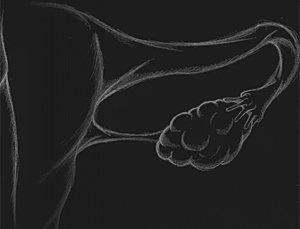
MADRID | VALENCIA.- Una mujer de 39 años se ha convertido en la primera en el mundo en dar a luz a gemelos tras ser sometida al reimplante del tejido ovárico, que le fue extraído antes de iniciar el tratamiento contra el cáncer de mama para preservar su fertilidad, y combinar esta técnica con la vitrificación de ovocitos.

El alumbramiento lo han confirmado fuentes del Hospital Doctor Peset de Valencia a elmundo.es. Han indicado que los gemelos nacieron en este centro sanitario el pasado domingo en la semana 34 de gestación, se encuentran ingresados en la Unidad de Neonatos y su evolución es favorable. Sin embargo, no darán más detalles hasta que los pequeños sean dados de alta.

Este embarazo gemelar -el primero de este tipo que se produjo en España- ha sido posible gracias a la colaboración del Hospital Doctor Peset y el Instituto Valenciano de Infertilidad (IVI), que han combinado las técnicas de implante de tejido ovárico y vitrificación de ovocitos.

A la madre de los gemelos se le diagnosticó el cáncer de mama hace dos años y antes de ser sometida al tratamiento de quimioterapia le fue extraído y congelado el tejido ovárico.

Una vez que superó la enfermedad, en enero de 2008, le realizaron el implante de tejido ovárico, lo que le permitió recuperar la función hormonal y ovárica, por lo que decidió iniciar un tratamiento de fecundación in vitro en el IVI.

La mujer, que finalmente consiguió quedarse embarazada de gemelos, tuvo problemas de esterilidad previos al cáncer de mama, tenía las trompas obstruidas por una peritonitis sufrida en la infancia y tras la quimioterapia presentó un fallo ovárico precoz.

Extraer la corteza ovárica

La técnica consiste en extraer, por vía laparoscópica, la corteza del ovario derecho de la paciente antes de que la mujer inicie el tratamiento oncológico. El tejido ovárico se preserva congelado en nitrógeno líquido a unos 196 grados bajo cero en el Centro de Transfusión de la Comunitat Valenciana.

Cuando los médicos consideran que la enfermedad oncológica ha remitido completamente y permiten a la paciente quedarse embarazada, el tejido ovárico se vuelve a implantar, pero en esta ocasión en el ovario izquierdo.

Una vez efectuado el reimplante, los ovarios necesitan entre cinco semanas y ocho meses para volver a reanudar su función hormonal, y si la operación tiene éxito la mujer recupera su fertilidad y puede quedarse embarazada de forma natural o recurriendo a tratamientos de reproducción asistida.

Hasta el momento sólo se han descrito en el mundo cinco nacimientos de recién nacidos sanos tras el implante de tejido ovárico, aunque éste es el primero en el mundo en el que, además, se ha combinado esta técnica con la vitrificación de ovocitos.

Cuando el pasado 24 de marzo se anunció que la madre estaba en la semana 15 de gestación, el conseller de Sanidad, Manuel Cervera, aseguró que este embarazo "abre la posibilidad real a las pacientes con cáncer de ser madres", ya que el 42% de las mujeres que reciben tratamientos como quimioterapia o radioterapia presentan fallo ovárico precoz.

Auge de los blanqueadores

SOCIEDAD | Auge de los blanqueadores

¿Quieren los indios ser blancos?

Un anuncio indio de televisión muestra a dos amigos muy parecidos pero con suerte muy distinta en la vida. Al final, se desvela la clave del éxito de uno y las desventuras del otro: el color de la piel. El rostro del triunfador brilla —literalmente— de felicidad, mientras que el de su amigo, más tostado, se lamenta. "Tengo mala suerte, es por culpa de mi cara". "No", le contesta su amigo, "no es por tu cara, ¡es por el color de tu cara!".

Cada año se venden en la India cosméticos blanqueadores de la piel por un valor superior a los 200 millones de euros, y aproximadamente cada mes se lanza un nuevo producto de este tipo, ya sean cremas, jabones o talcos.

Si antes eran las mujeres indias las que más se preocupaban por tener una piel "clara, fina y luminosa", ahora también ellos desean "atenuar sus rasgos étnicos" gracias a marcas como 'Fair Menz' o 'Fair&Lovely'. Se calcula que por lo menos el 20% de los usuarios de blanqueadores son hombres, la mayoría de ellos jóvenes y residentes en una ciudad grande, y ya es frecuente ver anuncios de modelos masculinos promocionando el uso de cremas solares ultra-protectoras, lociones para después del afeitado "con efecto blanqueador", y cremas antiarrugas que supuestamente aclaran la pigmentación de la frente y los pómulos.

En los salones de belleza masculinos que empiezan a proliferar en ciudades como Bombay, Delhi o Bangalore, la mayoría de los tratamientos incluyen la aplicación de algún producto de este tipo. En establecimientos como Essence, de Nueva Delhi, por el equivalente a 42 euros se ofrece un tratamiento facial completo que asegura resultados en un mes.

"Tal cosa no es posible", asegura el doctor Ramesh Pandi, dermatólogo en un hospital de la capital india. "No tiene sentido pensar que una crema, aplicada sobre la epidermis, sea capaz de alcanzar la parte interna de la piel, donde se encuentra la melanina", añade.

Sin embargo, decenas de fabricantes occidentales —que son imitados por multitud de marcas espurias—, como Avon o Garnier, se aprovechan de un mercado que no para de crecer, aun cuando la crisis hace mella en las ventas de los demás productos de belleza. Y, casualidad o no, la publicidad de tales cosméticos suele aparecer junto a las páginas de anuncios matrimoniales en la prensa india.

"Aunque no lo sean, todos ponen en los anuncios que son de piel clara", asegura una joven india. Al parecer, afirma, es un requisito que nadie se atreve a exigir abiertamente pero que todo el mundo ofrece, incluso si no se ajusta a la realidad. Algo así como un acuerdo tácito que nadie cumple.

Es en el sur del país, con una población de piel más oscura, donde los fabricantes suelen probar los nuevos lanzamientos antes de distribuirlos por el resto de la India. Y es allí donde, según la mitología hindú, el dios Krishna cantaba su lamento: "¿Por qué es mi esposa Radha tan blanca y yo soy tan oscuro?".

En busca de la Europa salvaje

Proyecto 'Wild Wonders of Europe'

En busca de la Europa salvaje

¿Queda algo salvaje en Europa? La primera impresión es que, en un territorio tan trabajado por la historia, pocos rincones silvestres pueden encontrarse. Sin embargo, entre ciudades, carreteras y campos de labor hay más de lo que imaginamos.

Eso es lo que han querido demostrar algunos de los mejores fotógrafos de naturaleza europeos, que se han embarcado más de un año en el reto de retratar los rincones mejor conservados del continente.

El resultado es un monumental despliegue de imágenes, compuesto por más de 150.000 fotografías que en breve serán mostradas al público a través de distintos soportes.

El proyecto se llama Wild Wonders of Europe y acaba de llegar ahora al final de su fase de trabajo de campo, tras acabar la última de las expediciones. Durante los últimos 14 meses ha habido 67 fotógrafos recorriendo Europa. Han visitado 118 localizaciones en 48 países, intentando completar un retrato colectivo de la naturaleza europea.

El proyecto es «una primicia mundial», explica Florian Moellers, director de comunicación de Wild Wonders. «Tenemos la colección más completa de las joyas naturales europeas que se haya realizado nunca. Enfrentándose al frío extremo, al calor y a escenarios de todo tipo el equipo ha creado una colección que quita el aliento y que muestra una cara de Europa que muchas veces no es bien conocida, con paisajes realmente salvajes y las especies más carismáticas».

El proyecto nace de la iniciativa privada. No hay una institución ni una organización detrás de la idea inicial, sino que esta surgió de fotógrafos de diversos países, que después lograron el apoyo de diversos socios, empresas e instituciones que actúan como patrocinadores.

En un ambiente especializado como la fotografía de naturaleza, muchos de los autores se conocen entre sí y comparten inquietudes. Así surgió Wild Wonders, con el afán divulgativo y la conservación de la naturaleza como objetivo. Según Moellers, lo que les mueve es mostrar que, pese a la creciente presión sobre los recursos, aún quedan maravillas naturales en Europa y hacer ver que algunas especies y ecosistemas están incluso mejorando gracias a los esfuerzos de conservación.

Disfrutar de la especeies salvajes

«El principal mensaje que queremos lanzar», afirma Moellers, es «que podemos todavía disfrutar de lugares y de especies salvajes, y que tenemos que protegerlas». «Sí, juntos podemos; la conservación de la naturaleza funciona», añade.

¿Cómo lo han intentado probar? Recorriendo todos los ecosistemas europeos. Y con una particularidad añadida al trabajo: que nadie diera nada por supuesto. Por eso, una de las condiciones era que ningún fotógrafo trabajara en su propio país. Se trataba de que «cada uno viera las cosas con ojos nuevos», explica Juan Carlos Muñoz, uno de los cuatro españoles enrolados entre los 67 participantes. El equipo hispano lo completaban José B. Ruiz, Iñaki Relanzón y Diego López, todos de sobra conocidos de la divulgación de la naturaleza. En esa dinámica de buscar lo desconocido, a Juan Carlos Muñoz, le correspondieron dos destinos en las islas británicas. Uno de ellos le llevó a Gales tras el milano real. «Hay sitios con condiciones especialmente buenas para ciertas especies. El milano real, por ejemplo, se puede avistar en España, pero en esa zona de Gales se concentran muchos ejemplares», explica.

«Personalmente, acabé muy satisfecho con las imágenes que pude tomar allí, pero lo que más me llamó la atención es que esa presencia de milanos es fruto de los esfuerzos de algunas personas de aquella comarca, que han puesto en marcha desde hace años diversas medidas de apoyo a la especie, que han dado sus frutos», añade.

Muñoz también ayuda a entender cómo es el trabajo de los fotógrafos de naturaleza. ¿Se trata sólo de documentar la fauna o también es una cuestión estética? «Hay una gran parte de arte», responde, «y también se da una evolución en el trabajo. En mi caso, por ejemplo, empecé queriendo documentar, pillar al animal, atraparlo en la foto. Después, vas evolucionando hacia objetivos estéticos y empleando recursos técnicos para buscar la belleza. Es una fusión de todo, de arte y de naturaleza».

Facebook Gives Birth to the Retrosexual

Facebook Gives Birth to the Retrosexual

Friday, September 11, 2009

RICO EN FLAVONOIDES

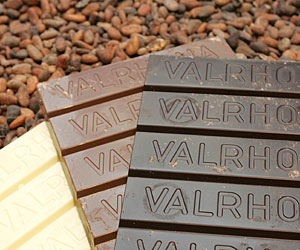
¿Protege el chocolate de los rayos solares?

  • Por sus propiedades, el cacao convencional no actúa como fotoprotector
  • Durante el proceso de fabricación, el chocolate pierde gran parte de los flavonoides
(Foto: Bernabé Cordon)

(Foto: Bernabé Cordon)

Actualizado sábado 05/09/2009 03:33 (CET)
ImprimirEnviar noticiaDisminuye letraAumenta letra
LAURA TARDÓN

MADRID.- Más dulce o más amargo, blanco, negro o con leche. Y dicen que mejora el humor. El chocolate no sólo es un capricho para el paladar y el ánimo. Ahora, un nuevo estudio confirma, por primera vez, que el cacao rico en flavonoides ayuda a proteger la piel de los rayos ultravioleta.

"Excepcionalmente ricos en flavonoides o flavona son los granos del cacao, que tienen una mayor capacidad antioxidante que otros alimentos, no el chocolate negro convencional. Desafortunadamente, durante el proceso de fabricación, sus propiedades se reducen enormemente", subrayan los autores de la investigación recientemente publicada en 'Journal of Cosmetic Dermatology'.

Según Eduardo Nagore Enguídanos, jefe clínico del Instituto Valenciano de Oncología, "ingerir esta sustancia natural no sustituye al fotoprotector habitual pero sí refuerza los cuidados de la piel frente a los rayos ultravioleta".

Esta misma opinión la comparte Yolanda Gilaberte, dermatóloga del Hospital de San Jorge de Huesca y experta en fotoprotección. "Es un buen complemento a las cremas fotoprotectoras, pero no las sustituye. La ventaja, en este caso del chocolate fotoprotector, es que produce una fotoprotección integral de toda nuestra piel y no interfiere con la síntesis de la vitamina D, como hacen los filtros solares", apunta Yolanda Gilaberte, dermatóloga del Hospital de San Jorge de Huesca y experta en fotoprotección.

La capacidad antioxidante de la flavona

Los flavonoides forman parte de numerosos alimentos, entre ellos, la soja o el té verde. En general, se encuentran en vegetales y frutas; también en bebidas como el vino o la cerveza.

Varios estudios han confirmado sus propiedades como antioxidante. Un ejemplo es una revisión realizada en el Hospital de León y publicada en 'Nutrición Hospitalaria'. Según este trabajo, "los flavonoides protegen al organismo del daño producido por agentes oxidantes, como los rayos ultravioleta, la polución ambiental, sustancias químicas presentes en los alimentos, etcétera".

Con el objetivo de evaluar el papel fotoprotector del consumo de este chocolate rico en flavonoides (elaborado por un método especial que no destruye esta sustancia) comparado con el que habitualmente se vende en los supermercados, un equipo de científicos de la Universidad de Londres ha analizado las experiencias de 30 personas. Se les dividió en dos grupos en función del tipo de chocolate que consumían (todos tomaron 20 gramos al día de este alimento). "La diferencia es que el primero contiene más de 600 miligramos de flavonoides por cada 20 gramos y el segundo no llega a los 30", señalan los responsables del estudio.

Al cabo de 12 semanas, los expertos calcularon la Dosis Eritematógena Mínima (DEM), es decir, la cantidad de radiación ultravioleta necesaria para la formación de eritema en la piel (enrojecimiento) en cada participante. Después, compararon esta medida con la tomada antes de comenzar el estudio.

Prevenir el fotoenvejecimiento

"Entre aquellos que tomaban chocolate rico en flavonoides, esta medida se duplicaba a los tres meses [tardaban más tiempo en enrojecerse por el sol], mientras que en el otro grupo no se experimentaban cambios significativos. Esto demuestra que el consumo regular de este tipo de cacao protege la piel de los efectos dañinos de los rayos ultravioletas", concluyen los expertos implicados en la investigación.

Esto traducido a la exposición diaria "tiene mucha importancia, pues podría parcialmente prevenir los efectos crónicos de la radiación ultravioleta, fotoenvejecimiento y cáncer de piel, lo cual tiene que demostrarse en estudios adicionales", explica Salvador González, profesor de Dermatología de la facultad de Medicina de la Universidad de Harvard (Boston) y del Memorial Sloan-Kettering Cancer Center (Nueva York, en EEUU).

"Estos resultados merecen ser estudiados a fondo. Son una muestra más de la importancia que tiene la alimentación en nuestra vida diaria", comenta el doctor Nagore.

Por su parte, los autores recuerdan que "anteriores investigaciones demostraron que el consumo de cacao mejora la apariencia de la piel y protege de enfermedades cardiovasculares, ya que influye en algunos factores de riesgo, como el colesterol o la presión arterial".

CAMBIO DE SEXO

Por fin ahora somos lo que parecemos

  • El abordaje psicólogico es esencial antes, durante y después del cambio de sexo
  • El objetivo es que los afectados construyan una entidad social nueva
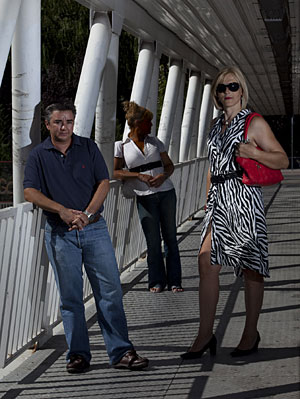
Jorge, Ana y Sara. (Foto: Gonzalo Arroyo)

Jorge, Ana y Sara. (Foto: Gonzalo Arroyo)

Actualizado jueves 10/09/2009 06:52 (CET)
Escuchar noticiaImprimirEnviar noticiaDisminuye letraAumenta letra
PATRICIA MATEY

MADRID.- Sara, Ana y Jorge son lo que parecen. Dos mujeres y un hombre. Pero su apariencia, 'esculpida' por las hormonas y la cirugía de cambio de sexo, es sólo el reflejo externo de cómo se han sentido desde niños. Exactamente del género opuesto al que vinieron al mundo. Sara tiene 25 años y nació, como su hermano gemelo, varón. Ana, de 36, casada y con dos hijas, vino al mundo como hombre y Jorge fue alumbrado como niña. Los tres son el testimonio de la transexualidad. "No nos gusta este termino. Somos hombres o mujeres, personas normales", apostillan. El estigma y el sufrimiento que acompañan a este trastorno, pero sobre todo su aparición precoz hacen indispensable el abordaje psicólogico de los pacientes y de sus familiares, tal y como ensalzan las últimas investigaciones en este campo.

Sara y Jorge se quitan la palabra la una al otro en el intento de hacer entender a los demás quiénes son y por qué. "Desde que tengo uso de razón me he sentido una chica. Una mujer en un cuerpo de hombre. Cada noche me acostaba pensando en una sola cosa: levantarme al día siguiente siendo una niña", relata Sara, que trabaja como peluquera.

Jorge asiente con un movimiento de cabeza. "Que a todo el mundo le quede claro. Nacemos así, esto no es un capricho. Desde los cinco años, casi como Sara, me dormía con el único deseo de amanecer como hombre. En mi caso, hasta mis propios compañeros de trabajo [tengo un puesto en el Ayuntamiento de Madrid] dicen que soy una persona nueva, que tenía que haberme cambiado el sexo mucho antes".

Aunque con retraso, el sueño de ambos se cumplió años después. Fue tras su paso por las manos de un equipo de especialistas de los Hospitales Ramón y Cajal y La Paz de Madrid. Todos pertenecen a la Unidad de Trastornos de Identidad de Género (UTIG) de los centros madrileños, una de las tres de referencia que existen en España [las otras dos están ubicadas en el Hospital Carlos Haya (Málaga) y en el Clínic (Barcelona)]. De la mano de un equipo multidisciplinar se moldea el cuerpo del sexo deseado y se prepara la mente para la nueva identidad.

Tanto el coordinador Antonio Becerra, como José Miguel Rodríguez Molina, psicólogo de la Unidad, defienden que aunque "el diagnóstico llega de la mano de un psiquiatra, porque el trastorno está recogido en el DSM-V [Manual diagnóstico y estadístico de los trastornos mentales de la Asociación Psiquiátrica de EEUU], la transexualidad no es una enfermedad mental".

En cambio, estos expertos admiten que su padecimiento sí tiene potenciales efectos psíquicos negativos y sociales en el individuo.

"Muchos de los pacientes diagnosticados de TIG presentan un índice elevado de patología psiquiátrica y una mortalidad por suicidio mayor que la población general. Los problemas psiquiátricos asociados con mayor frecuencia son los de personalidad, los depresivos, los neuróticos en general, la esquizofrenia, las conductas autolesivas o suicidas y el abuso de sustancias psicoactivas", refleja un trabajo publicado en la Revista de la Asociación Española de Neuropsiquiatría, firmado por miembros del equipo de la Unidad de Trastornos de Identidad de Género del Hospital Carlos Haya.

Parte de la culpa del padecimiento de estos trastornos reside en el sufrimiento prolongado de los afectados debido al tiempo que transcurre hasta que toman la decisión de pedir ayuda, la marginación que muchos padecen, el rechazo social y, a veces, también el familiar. O por el silencio autoimpuesto, como ocurre en el caso de Jorge. "Por no dar un disgusto en casa, para que mis padres no sufrieran, nunca dije lo que sentía ni lo que deseaba, hasta que no pude más y me di cuenta de que tenía que vivir mi vida. Por este motivo, y tal y como me ha explicado el psicólogo, he pagado un precio muy alto. Por ello también me ha costado más superar el trauma vivido en la infancia de desear ser un hombre siendo mujer".

Por casos como el suyo y porque en la mayoría de los pacientes el rechazo del propio sexo despierta en la infancia, la comunidad científica reclama la necesidad de diagnóstico y tratamiento tempranos. Un estudio con 200 pacientes de la UTIG del Carlos Haya y publicado en Originales y Revisiones determina que "los resultados obtenidos confirman la precocidad en el comienzo del problema y la necesidad de que los profesionales en general, y de salud mental en particular, se encuentren atentos a los síntomas de problemas de identidad de género, sobre todo los que trabajan con niños y adolescentes".

Una labor que ya se está desarrollando al otro lado del Atlántico. De hecho, el Hospital de Niños de Boston de EEUU es uno de los pioneros en la asistencia integral a menores transexuales.

Norman Spack, jefe del Servicio de Género de dicho centro, comenta desde su experiencia que "los menores con problemas de identidad que reciben atención médica integral para superar su tránsito al sexo opuesto tienen menos riesgo de necesitar medicación para trastornos mentales en un futuro". En España, hay entre 2.000 y 3.000 transexuales y se estima que cada año cerca de 60 acudirán a las unidades especializadas para solicitar un cambio de sexo.

Test de Vida Real

"No todos los casos acaban en cirugía. Se requiere un diagnóstico diferencial que establezca verdaderamente la existencia del trastorno. Que un hombre se vista de mujer sólo por las noches no es suficiente para considerarse transexual. De ahí también los dos años de tratamiento previos al cambio de sexo, en los que se realiza lo que conocemos como Test de Vida Real. En él, el paciente debe afrontar su problema en una esfera pública, lo que evidencia si está preparado para adoptar su nueva identidad social. Durante este tiempo, el abordaje psicológico representa la piedra angular del tratamiento. A la vez, se inicia la terapia hormonal".

Ésta consiste en la administración de estrógenos y antiandrógenos a las personas de genotipo masculino pero identidad femenina y andrógenos a los pacientes con genotipo femenino pero identidad masculina. Este tiempo de espera bajo tratamiento antes de pasar por quirófano es crucial para que no se adopten decisiones erróneas. "Algunas pacientes, después de la fase de valoración y diagnóstico espontáneamente cambian sus aspiraciones. Otros se adaptan de forma adecuada a sus identidades de género sin intervenciones médicas y otros se arrepienten durante la terapia psicológica a seguir", destaca el Protocolo de Intervención Psicológica de la Transexualidad de la Comisión de Psicología Clínica y de la Salud del Colegio Oficial de Psicólogos de Las Palmas de Gran Canarias.

En el resto de casos, los que siguen adelante con el cambio de sexo, el apoyo psicológico se irá adecuando a las fases de tratamiento. También se les prepara para la intervención.

María Jesús Lucio Pérez, socióloga y gestora de pacientes de la unidad del Ramón y Cajal, aclara que "la reasignación de sexo no es sólo cambiar los genitales. Se trata de construir una entidad social a través del aprendizaje de las conductas de rol que corresponde al otro sexo. Por ejemplo, los hombres que van a ser mujeres tienen que aprender cómo maquillarse, vestirse o comportarse. En la unidad hacemos talleres para facilitar este aprendizaje". El proceso es largo, de ahí que muchos de los afectados se inquieten y demanden a los profesionales que agilicen el proceso. "Cuando se deciden a pedir ayuda vienen buscando soluciones rápidas. Les tenemos que tranquilizar y poco a poco van frenando su urgencia", destaca María Jesús.

Niveles altos de ansiedad son precisamente, el trastorno "más frecuente que hemos encontrado en los pacientes que acuden a esta unidad tras llevar a cabo un estudio que va a ser publicado en un futuro próximo. Hemos evaluado a 69 afectados con una media de edad de 32 años y nos hemos encontrado con una incidencia de depresión menor de la esperada", explica el psicólogo José Miguel Rodríguez.

Otras alteraciones comunes son el narcisismo y la obsesión. "Están continuamente pensando en su problema", añade. Se suman otros rasgos de personalidad como "el rechazo a las normas, aunque son respetuosos con ellas", destaca el estudio. Uno de los aspectos que sobresale en estos pacientes, y en el que más esfuerzo psicológico se invierte, es en que logren poner los pies en la tierra. "Han anhelado tanto el cambio de sexo que creen que con él cualquier cosa va a salir bien. Hay que enseñarles que esta expectativa de éxito es desmedida, ya que existen otros problemas en la vida, como el paro Debemos prepararles para los retos que tendrán que afrontar, como es la aceptación social", apostilla Miguel Rodríguez.

Decrease font Decrease font
Enlarge font
Enlarge font

(CNN) -- The international governing body for athletics urged caution Friday after reports that the world-champion South African runner Caster Semenya has both male and female organs.

The front cover of You magazine

The front cover of You magazine shows Semenya after a recent makeover.

The Sydney Morning Herald in Australia and The Sun newspaper in Britain reported that gender tests ordered by the International Association of Athletics Federations (IAAF) show the 18-year-old is a hermaphrodite.

Neither paper named the source of their information. IAAF spokesman Nick Davies would not discuss the findings with CNN. "I simply haven't seen the results," Davies said.

"We have received the results from Germany, but they now need to be examined by a group of experts and we will not be in a position to speak to the athlete about them for at least a few weeks.

"After that, depending on the results, we will meet privately with the athlete to discuss further action." Has Semenya been treated fairly?

The IAAF issued a statement, saying no decision on the case will be announced until the experts can look at the results.

A final decision regarding the case is not expected before the IAAF Council meets in late November in Monaco, the IAAF said.

Davies also said the news reports should be treated with caution. The newspapers said extensive physical examinations of Semenya show she has no ovaries, but rather has internal testes, which are producing large amounts of testosterone. What is intersexuality?

Semenya won the women's 800-meters gold medal at the World Athletics Championships in Berlin last month.

She crushed her rivals by streaking away to secure victory in 1 minute, 55.45 seconds -- the best women's time in the world this year.

Defending champion Janeth Jepkosgei of Kenya took the silver and Jennifer Meadows of Britain claimed bronze.

The IAAF said it was seeking tests on Semenya's gender even before that race. Davies said questions about her were first raised after her astonishing displays at the African junior championships in July, with her masculine build and surprising performance fueling the rumors.

South Africans reacted angrily to Friday's reports, with one newspaper headline declaring "outrage."

Sport and Recreation Minister Makhenkesi Stofile said he was "shocked and disgusted" at the treatment that Semenya has received from the media, the IAAF, and the world.

"She may be a hermaphrodite, but so what? She is still a girl," Stofile told a news conference in Pretoria.

Even if Semenya has an unfortunate "proportion of hormones," he said, she is still "a young girl enjoying growing up." Stofile said he believes the teenager's human rights have been violated and that she was not given a chance to understand what the gender testing was all about.

South Africa will fight back if Semenya is excluded from further competition, Stofile said, adding, "It will be a third world war."

All indications were Friday that, at the very least, Semenya may be able to keep the gold medal she won in Berlin.

"Our legal advice is that, if she proves to have an advantage because of the male hormones, then it will be extremely difficult to strip the medal off her, since she has not cheated," Davies told CNN.

Semenya's countrymen -- including her father and the South Africa team manager -- have maintained that Semenya is a female.

Thousands of supporters crammed the airport in Johannesburg when she returned from Berlin last month. And this week, the athlete appeared on the cover of a South African magazine wearing makeup, jewelry and a glamorous dress.

Under IAAF rules, any time there is suspicion about an athlete's gender, the athlete can be asked to attend a medical evaluation before a panel consisting of a gynecologist, an endocrinologist, a psychologist, an internal medicine specialist and an expert on gender issues.

There are chromosome tests and scans of the athlete's body, Davies has said. He called gender verification -- which is generally required only for female athletes -- "an extremely complex procedure."

The process of gender verification has undergone big changes since it was first introduced for international competition in the 1960s, the IAAF said.

The first mechanism involved "rather crude and perhaps humiliating physical examinations," which soon gave way to mouth swabs to collect chromosomes, the IAAF said.

There were too many uncertainties regarding the mouth swabs, so the IAAF abandoned them in 1991 and the International Olympic Committee discontinued them in 2000, the IAAF said.

A proper test has yet to be found, the IAAF said, and the current round of tests is considered a good interim solution.

Every component that makes up your life experience is drawn to you by the powerful Law of Attraction's response to the thoughts you think and the story you tell about your life.

Thursday, September 10, 2009

Nancy Kheiry García-Echevarría

Nancy Kheiry García-Echevarría

Nancy abrío "El Secreto" - La Ley de Atracción:

"Todo lo que te rodea en tu vida, incluyendo aquello de lo cual te quejas, tú lo atrajiste."

Nancy Kheiry García-Echevarría

Source: www.nytimes.com
GRAND JUNCTION, Colo. (AP) -- Lots of babies will be able to celebrate being born on a date full of nines, but Alexander Robert Orient has a little extra distinction. He was delivered by Caesarean section at St. Mary's Hospital in Grand Junction at 9:09 a.m. on 9/9/09.
Nancy Kheiry García-Echevarría
Source: www.youtube.com
The only road between Spain and Gibraltar crosses the Runway. Road is closed when a plane lands.

Thursday, September 3, 2009


Drug giant Pfizer to pay record $2.3B fine

  • Story Highlights
  • The record $2.3 billion fine is for illegally promoting certain pharmaceuticals
  • One of those drugs was the anti-inflammatory medication linked to heart attacks
  • Company plead guilty for "misbranding ... with the intent to defraud or mislead"
September 2, 2009 -- Updated 2317 GMT (0717 HKT)
  • Next Article in World Business »
By Carol Cratty
CNN
Decrease font Decrease font
Enlarge font Enlarge font

WASHINGTON (CNN) -- Pharmaceutical giant Pfizer has agreed to pay a record $2.3 billion settlement to resolve criminal and civil liability for illegally promoting certain pharmaceuticals, the Justice Department announced Wednesday.

Pfizer pays record fine to avoid prosecution for illegally promoting certain drugs.

Pfizer pays record fine to avoid prosecution for illegally promoting certain drugs.

Officials from the Justice Department and the Department of Health and Human Services said the world's largest drug company promoted four drugs for use on certain ailments or at dosages that were not approved by the Food and Drug Administration.

One of those drugs was the anti-inflammatory medication Bextra, which Pfizer pulled off the market in 2005 after it was linked to increasing the risk of heart attacks and strokes.

"Pfizer promoted the sale of Bextra for several uses and dosages that the FDA specifically declined to approve due to safety concerns," the Justice Department said in a news release.

A Pfizer subsidiary, Pharmacia & Upjohn Company, agreed to plead guilty to a felony violation of the Food, Drug and Cosmetic Act for "misbranding Bextra with the intent to defraud or mislead."

The settlement announcement said Pfizer also illegally promoted the anti-psychotic drug Geodon, the antibiotic Zyvox and the anti-epilepsy drug Lyrica.

Associate Attorney General Tom Perrelli told reporters that recommending drugs for uses not approved by the Food and Drug Administration creates a situation where "public health may be at risk."

"There can be a real danger for patients when medical providers are not provided with accurate and full disclosure concerning a drug's risks and benefits," he said.

The Justice Department said Pfizer sales people created sham requests from physicians asking for information about unapproved uses of certain drugs. The information was then mailed to doctors. Officials said Pfizer also entertained doctors at resorts and encouraged them to prescribe its drugs.

The Justice Department also said the pharmaceutical giant provided kickbacks to health-care providers to encourage them to prescribe other drugs, including Lipitor, Viagra and Zoloft.

Health and Human Services Secretary Kathleen Sebelius said the settlement is historic not only because of the high financial penalty to Pfizer but also because the company will be subject to "the most comprehensive corporate integrity agreement that a drug company has ever signed in the United States."

The terms call for Pfizer to conduct yearly audits and then certify it is in compliance with laws. They also require the company to create a way for doctors to report questionable behavior by Pfizer sales people, and say the company will post information on its Web site about payments and gifts to doctors.

Pfizer issued a statement saying, in part, "We regret certain actions taken in the past, but are proud of the action we've taken to strengthen our internal controls."

The Justice Department said the investigation and settlement would not have been possible without the assistance of whistle-blowers who worked at Pfizer. The settlement includes a provision for six of those whistle-blowers to split more than $100 million dollars.